


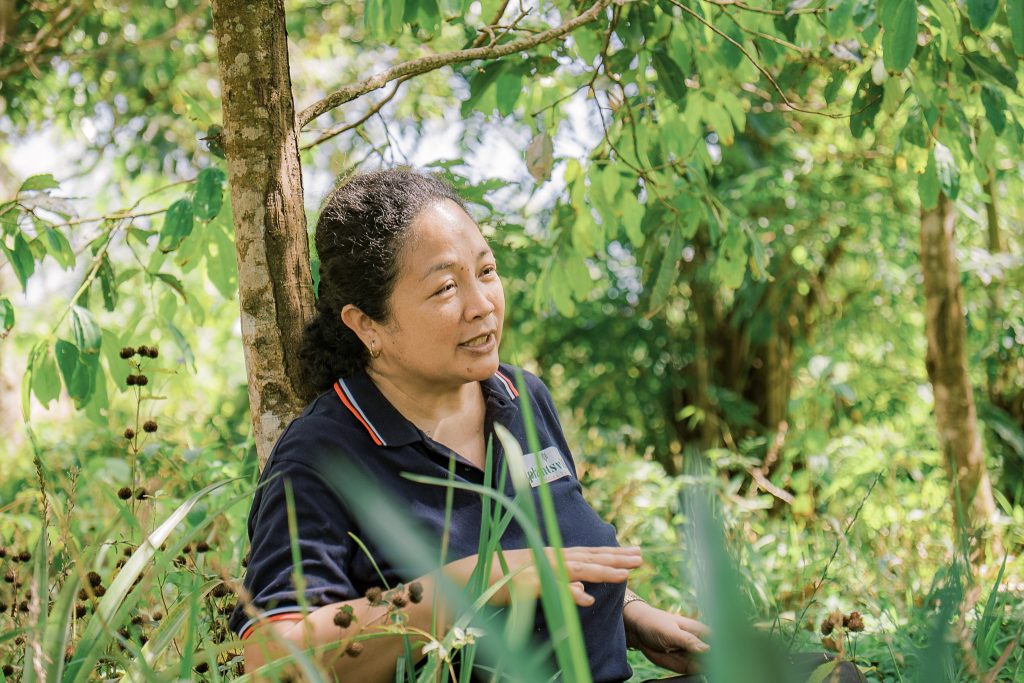
The trees stand quietly in the highlands of Don Salvador Benedicto, Negros Occidental, their leaves swaying gently with the mountain breeze, unnoticed for years, and for some, even taken for granted. For 74-year-old Ninfa Denamarca, these trees are more than part of the landscape; they are part of her survival. “This is my life,” she shared. “I farm, I harvest, I sell what I can. That’s how I live.” A widow, she tends to her land with what strength she has left, growing coffee, cacao, jackfruit, and now, cinnamon. Income is uncertain, often small, sometimes no more than a few thousand pesos a month. Fertilizer is expensive, labor is harder to afford, and the challenges of farming only grow with age. Yet among all her crops, one stands out for its quiet promise. “Cinnamon,” she said, “it grows naturally. It doesn’t need fertilizer. And now, it gives us additional income, depending on the volume we can harvest and sell.”
Based on Plantsville’s sourcing, farmers typically earn around Php 15.00 per kilo of fresh cinnamon leaves, with an average delivery of 200 kilos per harvest cycle. Cinnamon leaves are generally harvested every six months – three months for the leaves to grow and another three months for the oil to develop in the leaves. Currently, Plantsville purchases from farmers around twice a year, depending on market demand and sales capacity, providing farmers with a modest but important supplemental income stream.
.
In 2016, November Canieso-Yeo, founder of Plantsville Health, was tracing a path that would eventually lead her to farmers like nanay Ninfa. Trained in economics, she spent years in the corporate world, working as a researcher, a loan officer at a major bank, and later in the telecommunications industry, before deciding to leave and pursue her own ventures. “I really wanted to build something,” she said. What began as a small home garden soon turned into something more. While planting what she called “superfoods,” she came across cinnamon and discovered something that surprised her: the Philippines had its own native cinnamon species, locally known as kaningag, referring to any of the 21 native species found across the country, yet the country continued to import almost all cinnamon. “There was clearly a gap,” she explained. “We had demand, but we weren’t producing our own.”
.
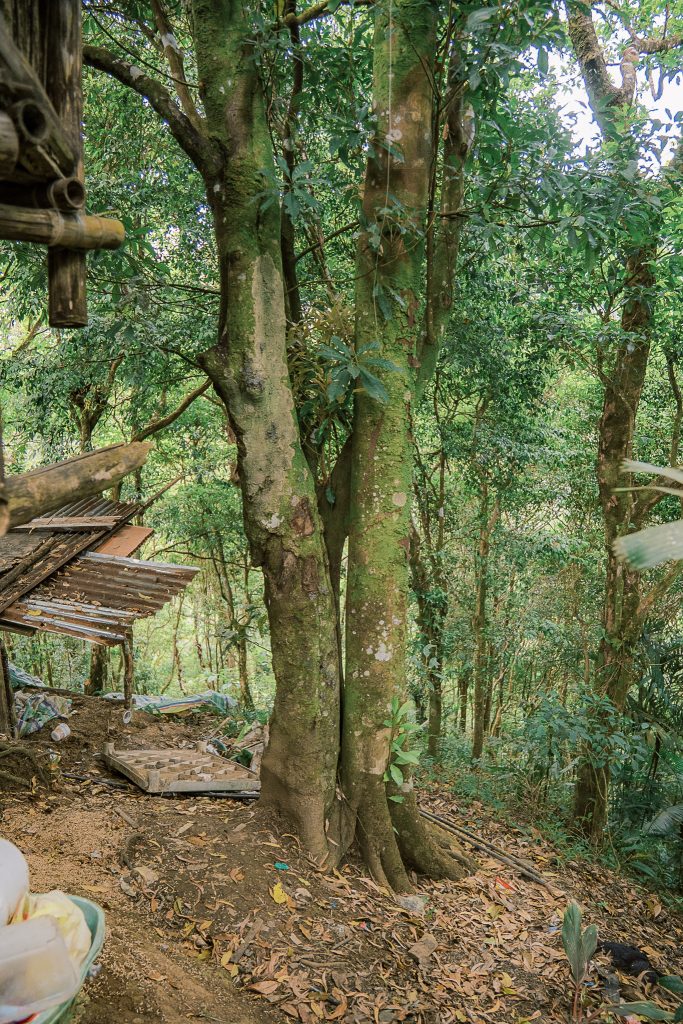
At the same time, another reality became clear. Many of these native cinnamon trees were disappearing. “It was alarming,” she said. “If we lose the trees, we lose everything, there’s no product, no livelihood, no opportunity.” 20 of the 21 native species are endangered/threatened. What started as a gardening interest quickly evolved into a mission, to restore Philippine cinnamon while building a sustainable enterprise around it. This became the foundation of Plantsville Health.
The model was both simple and complex. First, identify remaining “mother trees” in natural forests. Then, work with farmers to propagate seedlings and reintroduce cinnamon into their farms. “You have to start with education and then planting,” November explained. “Because without trees, there is nothing to harvest.” Through partnerships with local institutions such as the Provincial Environment Management Office (PEMO), farmers were engaged, trained, and supported. Seedlings were grown, distributed, and planted across communities. Farmers were also paid to bag and plant the seedlings, providing them with additional income even before the trees could be harvested. Aside from Plantsville Health, farmers are also able to sell seedlings to other buyers, creating another income opportunity from the growing interest in Philippine cinnamon. Over time, what began with a handful of trees expanded into thousands. Today, there are 80 planting sites spread across eight municipalities, with the majority located in Don Salvador Benedicto, which accounts for 64 farms/sites across the barangays of Bagong Silang, Benejewan, Bunga, Kumaliskis, Pandanon, and Pinowayan. The remaining sites are located in Murcia, Kabankalan, Silay, Isabela, Cadiz, Talisay, and Himamaylan.[1]
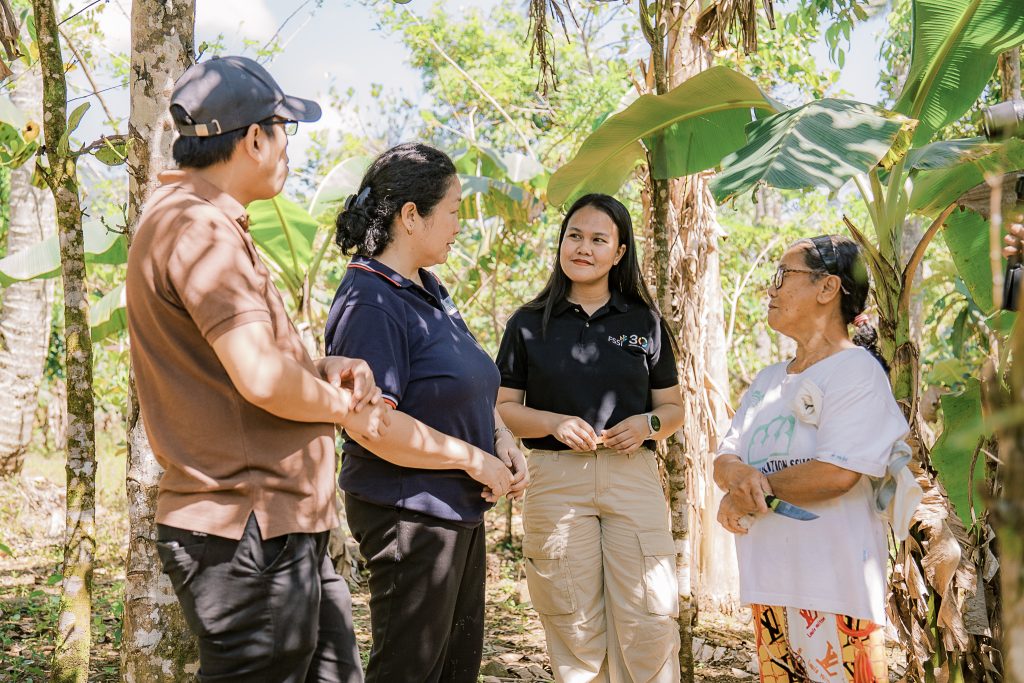
Unlike traditional extraction practices that harm trees, Plantsville focused on harvesting cinnamon leaves, allowing trees to continue growing while generating income. Farmers collect and deliver the leaves, which are then air dried and processed into essential oils and products such as hydrosol, massage oil, , and other wellness and personal care items. To ease the cost of participation for farmers, Plantsville Health provides subsidy support for harvesting costs and pays for the transportation of delivered cinnamon leaves and seedlings. “It’s important that farmers understand the value of what they are planting,” November said. “When they see that it can be used for food, medicine, cosmetics, they take care of it.” The work is also accessible. Harvesting leaves is less labor-intensive compared to other crops, making it suitable even for older farmers who can still manage light but meaningful farm work.
.
For nanay Ninfa, this shift in understanding was transformative. “Before, I thought you had to cut the tree to use it,” she said. “Now I know even the leaves have value.” Introduced to cinnamon farming by November in 2017, she began planting on her land, learning how to grow and harvest it properly. Today, she has hundreds of trees, some mature, others still growing. Despite her limited resources, she continues to nurture them, seeing in them a future she hopes to pass on. “This land came from my father,” she shared. “When I am gone, I will leave this to my children and grandchildren.” She has already started teaching her children and even her grandchildren how to care for the land and the cinnamon trees, passing on not just a source of income, but knowledge and responsibility. “I teach them what to do,” she shared, “so that when I am gone, they can continue what I started.”
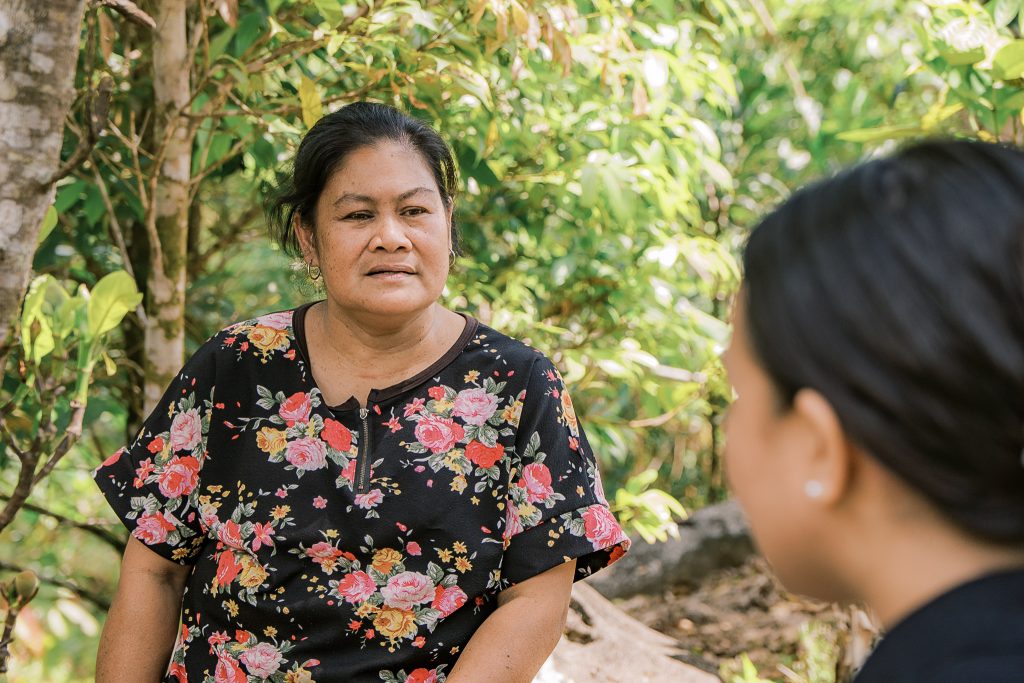
Her daughter, Villa Carpen, plays a crucial role in making that future possible. While her mother manages the farm, Villa bridges the gap between the community and the market. “November chats me when she needs an order,” she explained. “Then I tell my mother, and we start harvesting.” Together with her husband and occasional hired help, they gather cinnamon leaves, pre-dry them, pack them into sacks, and arrange for transport to Bacolod City. “We coordinate everything, from harvesting to delivery,” she said. For Villa, the work is both physical and logistical. She also helps sell coffee and other products by the roadside, contributing to the family’s income. “Life here is really hard when there’s no work,” she said. “So we find ways.”
Nanay Ninfa is among approximately 76 partner-farmers of Plantsville across Don Salvador Benedicto and including the barangays of Pandanon, Bagong Silang, Pinowayan, Kumaliskis, and Benejewan who supply cinnamon leaves to Plantsville Health. Through this network, the enterprise is able to source raw materials while providing farmers with an additional livelihood opportunity rooted in their existing land and resources.
Through Plantsville Health, that effort is met with opportunity, though not without challenges. “If there are no orders, we also have no income,” Villa added. Demand remains inconsistent, and while cinnamon has potential, the market is still growing. “If there were more orders, we could earn more,” she said.
For November, this is one of the biggest challenges. “Not many people know that we have Philippine cinnamon,” she explained. Building awareness has become a central part of her work, through storytelling, social media, and partnerships. Products are now sold through their website, in one of the biggest malls in the Philippines, and through e-commerce platforms, and even internationally through platforms like Amazon. “When people understand what we’re doing, they want to support it,” she said. “They see that it’s not just a product, it helps farmers and the environment.”
A significant boost to Plantsville Health’s growth came through its partnership with the Foundation for a Sustainable Society, Inc. (FSSI). November shared that FSSI provided seed funding at a critical stage of the enterprise, which enabled her to enter the international market. “The support helped me register our trademark in the United States and bring our products to Amazon,” she explained. This step was essential, as entering global platforms required compliance, branding protection, and upfront investment, barriers that are often difficult for small social enterprises to overcome. Through this support, Plantsville was able to position Philippine cinnamon beyond the local market and begin building a presence internationally.
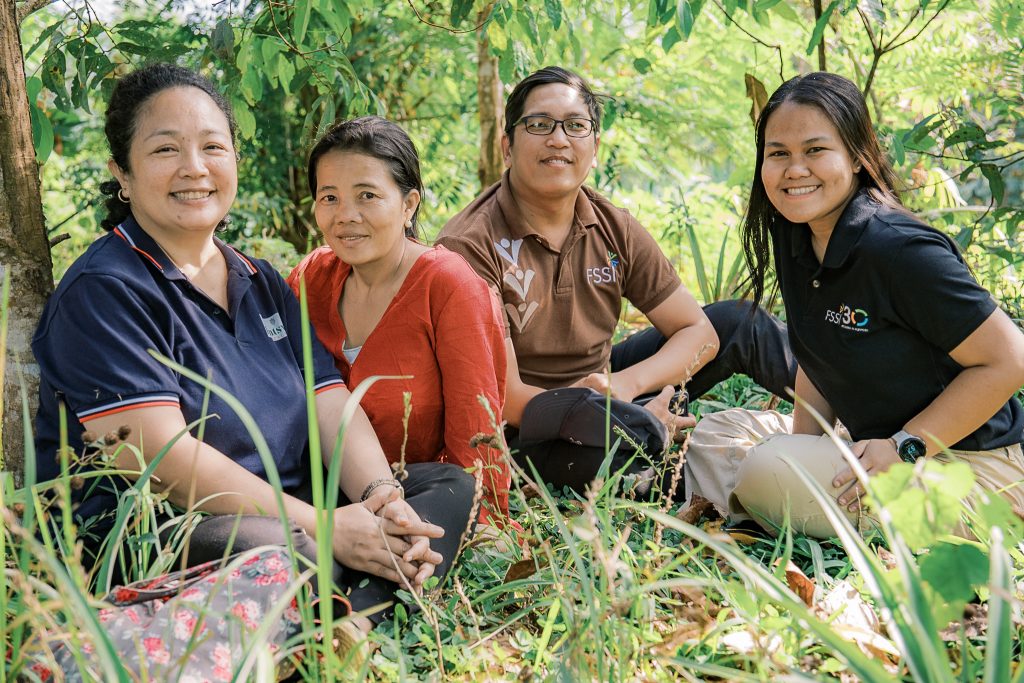
Beyond funding, FSSI also provided technical support that strengthened the enterprise’s long-term sustainability. November highlighted how guidance on concepts such as the “triple bottom line (3BL) of people, planet, and profit” helped her better understand how to balance financial viability with social and environmental impact. FSSI and its social enterprise partners adopt 3BL, a strategy to help enterprises achieve and maintain financial sustainability while intentionally improving the lives of people and taking care of the environment.
“Those are things I didn’t fully understand before,” she said, “but now I see how important they are.” This support also helped her think more strategically, not only about growing the business, but ensuring that it continues to benefit farmers, protect the environment, and remain resilient during crises. For November, these interventions were not just about expansion, but about building a stronger, more intentional social enterprise.
Other institutions have also contributed to the enterprise’s growth. The Department of Science and Technology (DOST) supported research into the chemical properties of cinnamon and funded equipment and facility, the Technological University of the Philippines Visayas (TUPV) provided the processing facility, and West Visayas State University, together with scientists, continues to study its potential, while the Negros Occidental Provincial Environment Management office (PEMO) remains instrumental in farmer engagement and reforestation efforts. Market access has also been expanded through partnerships with major retail and online selling platforms, helping introduce Philippine cinnamon to more consumers locally and abroad. Scientists and professionals provided critical support.
Still, the work of a social enterprise is never without uncertainty. “Cash flow is critical, especially during crises,” November said. Rising logistics costs, global instability, and shifting demand all affect operations. “I have to make sure the business survives,” she added. “Because if we don’t survive, we cannot buy from the farmers.” For her, survival is not just about the enterprise, it is about sustaining the entire ecosystem behind it.
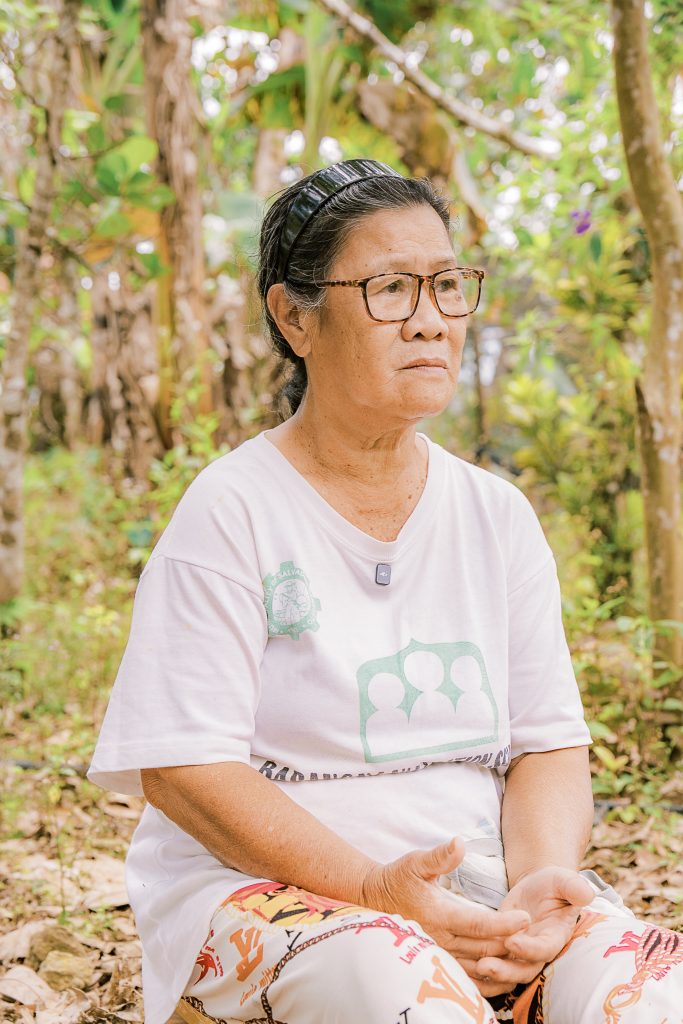
This balance is deeply felt on the ground. For nanay Ninfa, every purchase matters. “Even if it’s just 200 kilos,” she said, “it already helps me.” These orders are typically placed based on demand, with Plantsville sourcing from farmers on a per-order basis. A single order of 200 kilos is usually consolidated into around 10 to 11 sacks of pre-dried cinnamon leaves, with each sack weighing approximately 20 kilos. Harvesting and preparation can take one to two days and may require additional hired labor to complete the volume. However, orders are not regular and may only come once or twice a year, making each transaction a critical source of income for farming households. She dreams of more frequent orders, of being able to plant more trees, and of seeing others in her community do the same. In their barangay, many farmers continue to support their households through small but steady sources of income, and cinnamon offers an additional opportunity that fits within their daily lives.
For Villa, the dream is simple, to learn more, to do more, and to help her family grow. “I hope we can learn how to process cinnamon,” she said. “So we can make more products, not just sell leaves.” It shows her desire to improve their livelihood and make better use of what they harvest.
.
For November, the vision extends even further. “My dream is to buy consistently from the farmers,” she said. “So they see that if they plant more, they can earn more.” She envisions a system where planting, production, and market demand move together, a virtuous cycle that benefits everyone involved. She also hopes for stronger institutional support, including government procurement of products made from cinnamon. “If there is a sure market, then we can keep buying from farmers,” she explained.
At its core, Plantsville Health is about more than cinnamon. It is about restoring what was once overlooked, reconnecting people to their land, and building systems that allow both to thrive. “We are just beginning,” November said. “We are only scratching the surface of what Philippine cinnamon can do.”
Back in the highlands, the trees continue to grow, quietly, steadily, rooted in soil that has sustained generations. For nanay Ninfa and her family, they are no longer just part of the forest. They are a source of hope, of income, and of a future that, like the trees themselves, is slowly taking shape.
[1] Breakdown of planting sites: Don Salvador Benedicto has 64 farms/sites, distributed across Bagong Silang with 6 farms, Benejewan with 3 farms, Bunga with 6 farms, Kumaliskis with 6 farms, Pandanon with 20 farms, and Pinowayan with 16 farms. Other planting sites are located in Murcia with 4 sites, Kabankalan with 5 sites, Silay with 2 sites, Isabela with 2 sites, Cadiz with 1 site, Talisay with 1 site, and Himamaylan with 1 site.
